U.S. Flag Etiquette
Practical tips for displaying, lowering, caring for, and retiring the United States flag respectfully.
Quick reference
When in doubt, keep it visible, clean, and dignified.
These tips summarize common U.S. Flag Code guidance. Mast is not an official government source, so use the linked official text when a formal policy decision matters.
Display during daylight
The traditional outdoor display window is sunrise to sunset. A flag may fly 24 hours a day when it is properly illuminated after dark.
Watch the weather
Avoid flying the flag in harsh weather unless you are using an all-weather flag made for those conditions.
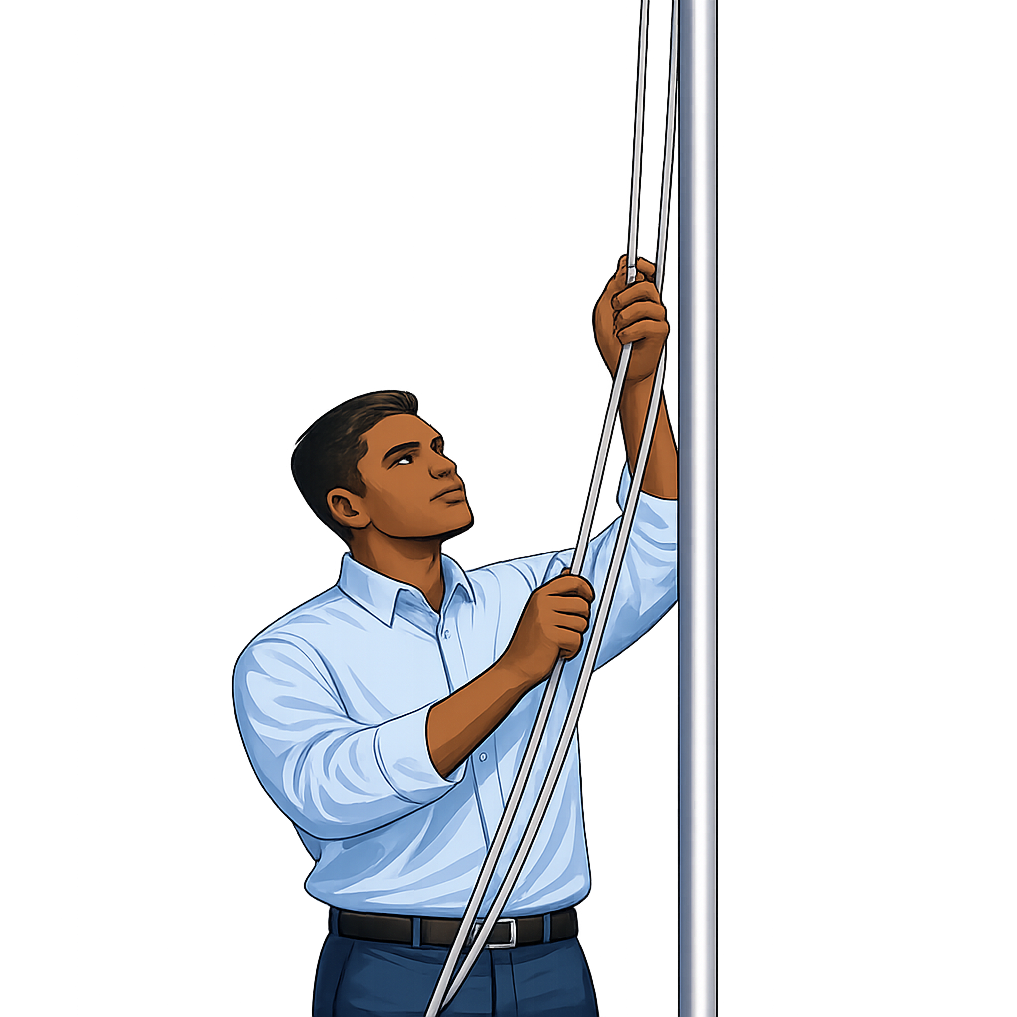
Raise briskly, lower ceremoniously
Hoist the flag with purpose. When lowering it, move deliberately and keep it from touching the ground, floor, water, or merchandise.
Half-staff has a sequence
Raise the flag to the peak for an instant, then lower it to half-staff. Before taking it down, raise it to the peak again.
Memorial Day is special
On Memorial Day, the flag is displayed at half-staff until noon, then raised to the top of the staff until sunset.
Give the U.S. flag the place of honor
With state or local flags on nearby staffs, the U.S. flag is raised first, lowered last, and no other flag should be above it.
Hang it with the union correctly
When displayed flat against a wall or in a window, the blue union should be uppermost and to the observer's left.
Retire worn flags respectfully
When a flag is no longer a fitting emblem for display, retire it in a dignified way. Many civic and veteran groups host retirement ceremonies.